Electrostatic precipitator
Current measurement
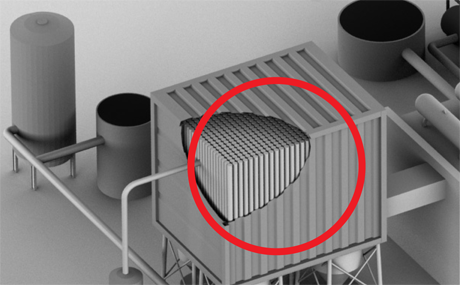
In a coal-fired power plant, using the force of an induced electrostatic charge, an electrostatic precipitator (ESP) is used to remove ash, dust and smoke from flue gas so it does not pass into the atmosphere.
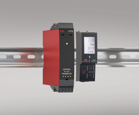
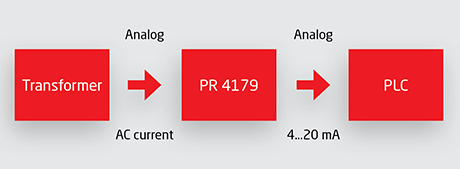
Accurate measurements of the primary electrostatic transformer current are necessary to keep a stable process. By using a 1000/1 current transformer connected to a PR 4179 AC/DC transmitter, the 4179 transmitter converts the AC-measurement to a standard 4...20 mA signal directed to the DCS. The 2.3 kV isolation in the 4179 provides excellent noise immunity, and protects the non-isolated PLC.
Application:
> Need more information? Please contact us.
What is an electrostatic precipitator (ESP) and how does PR Electronics support ESP monitoring?
An electrostatic precipitator is an air pollution control device used in coal-fired power plants and industrial facilities to remove particulate matter from flue gas using high-voltage electric fields. The PR 4179 AC/DC Transmitter monitors ESP electrical parameters — including the high-voltage transformer secondary current via a 1000/1 current transformer — and converts them to isolated 4-20 mA signals for the DCS. With 2.3 kVAC galvanic isolation, the PR 4179 safely interfaces between the high-voltage ESP power supply circuits and the control system.
Why is monitoring ESP current and voltage critical for coal power plant emissions compliance?
ESP collection efficiency depends directly on maintaining optimal corona current and voltage across the collection plates. If the electrical field weakens due to electrode degradation, ash buildup, or power supply faults, particulate emissions increase and may exceed regulatory limits. Continuous monitoring via the PR 4179 AC/DC Transmitter provides real-time visibility of ESP electrical performance, enabling operators to detect issues before emissions exceed permit levels.The 0...5 AAC RMS range makes it possible to accurately measure a typical current transformer, while the 0...300 VAC RMS range allows accurate supply voltage monitoring.
What is the significance of 2.3 kVAC isolation in electrostatic precipitator instrumentation?
Electrostatic precipitators operate at extremely high voltages — typically 40-100 kV DC on the discharge electrodes. Even though monitoring is performed on the low-voltage secondary side of current transformers, significant common-mode voltages and transients can occur. The PR 4179 provides 2.3 kVAC isolation (500 VAC basic working voltage) between the input circuit connected to the ESP electrical system and the output circuit connected to the DCS. This robust isolation protects the control system from damaging voltage transients originating in the high-voltage ESP circuits.