Signal conditioning for non-standard analog signals
Need to measure a signal that falls outside the standard input ranges of your PLC or control system?
Many real-world process signals do not fit neatly into typical control system input ranges.
Applications such as shunt-based current measurement, combustion and exhaust sensor monitoring, bipolar-to-unipolar signal conversion, and battery voltage monitoring often require reliable signal conditioning before the signal can be used by a PLC or other control equipment.
Standard PLC input cards from leading automation brands typically support ranges such as 0–10 V, ±10 V, 0–20 mA, and 4–20 mA. In practice, however, engineers often need to measure voltages and currents outside these ranges. That creates a clear need for signal conditioning that is accurate, stable, and easy to configure.
In these applications, successful signal conditioning depends on a few critical technical capabilities:
Customer challenge | How a signal converter helps | Customer value |
When measuring very small signal amplitude, even minor electrical noise can reduce signal quality and compromise the result. | A high signal-to-noise ratio helps preserve low-level signals throughout the conditioning chain. | Cleaner measurements, better precision, and greater confidence in low-level signal data. |
Small amplitude signals are often affected by ground reference differences and ground loop currents, which can introduce measurement offset. | An isolated input removes the impact of ground loops by allowing the measurement point to float independently. | More reliable measurements in electrically noisy environments – without depending on perfect ground equalization. |
Amplifying small signals can introduce offset and gain drift over time, reducing long-term measurement stability. | A stable, low-drift design combined with simple scaling helps maintain accuracy over time and makes setup easier. | Less time spent on commissioning and recalibration while maintaining dependable performance over the life of the installation. |
When measuring higher voltages, the potential difference at the measurement point can exceed the isolation limits of standard PLC input cards. | High working-voltage isolation – typically 250 to 300 V AC/DC – helps separate field signals from the control system safely. | Protect PLC input cards more effectively, reduce failure risk, and avoid unnecessary replacement caused by surges or continuous overexposure to voltage stress. |
Scaling higher voltages to the exact range of interest is often difficult when you are limited to standard input ranges or complex manual gain and offset adjustments. | Simple configuration of custom upper and lower ranges makes it easy to match the signal to your application without sacrificing accuracy. | More accurate fit to your real operating range, faster setup, and less time spent fine-tuning during commissioning. |
Solutions for non-standard current and voltage signals
Meet PR 4179, PR 4179B, and PR 4184
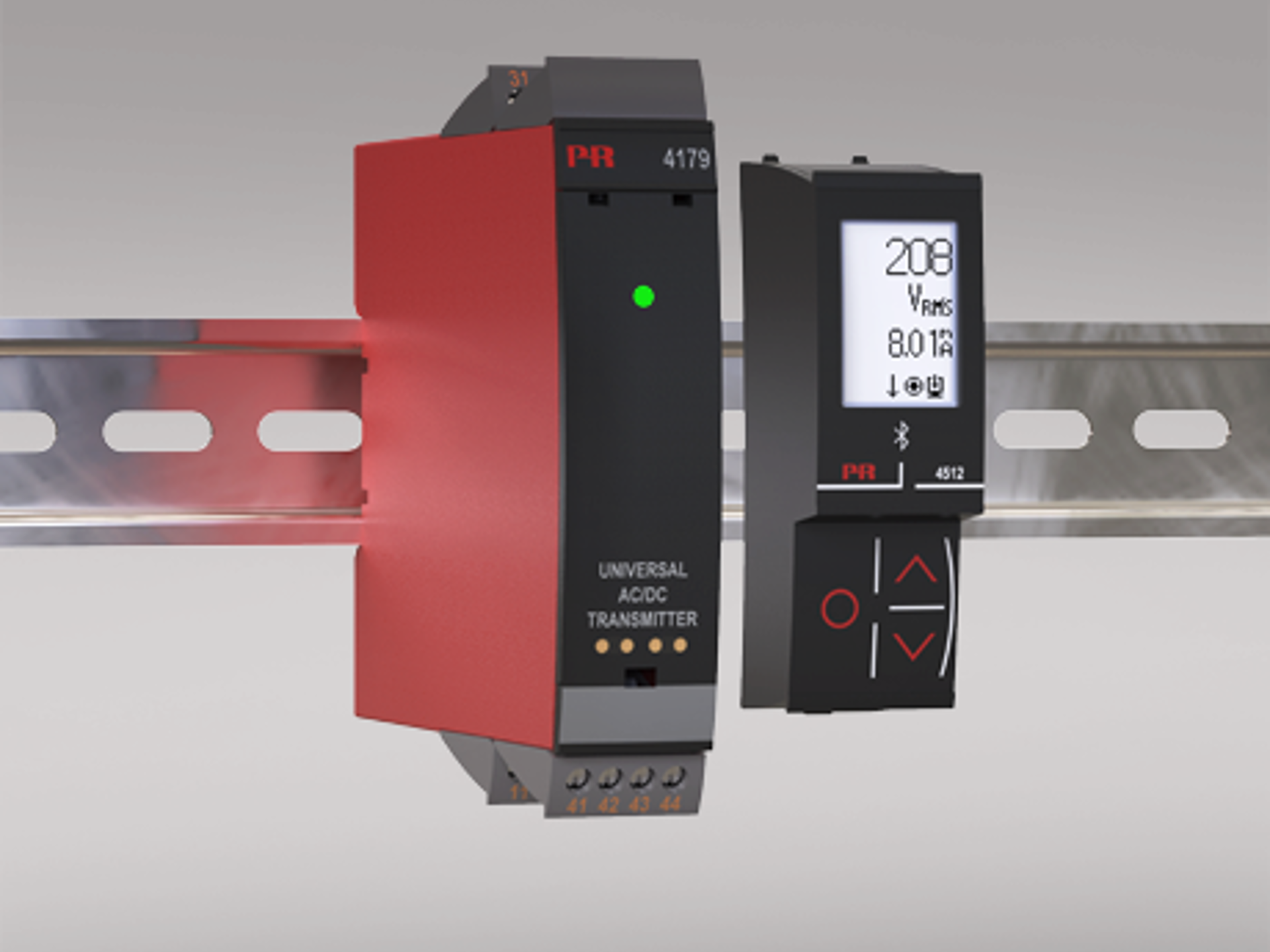
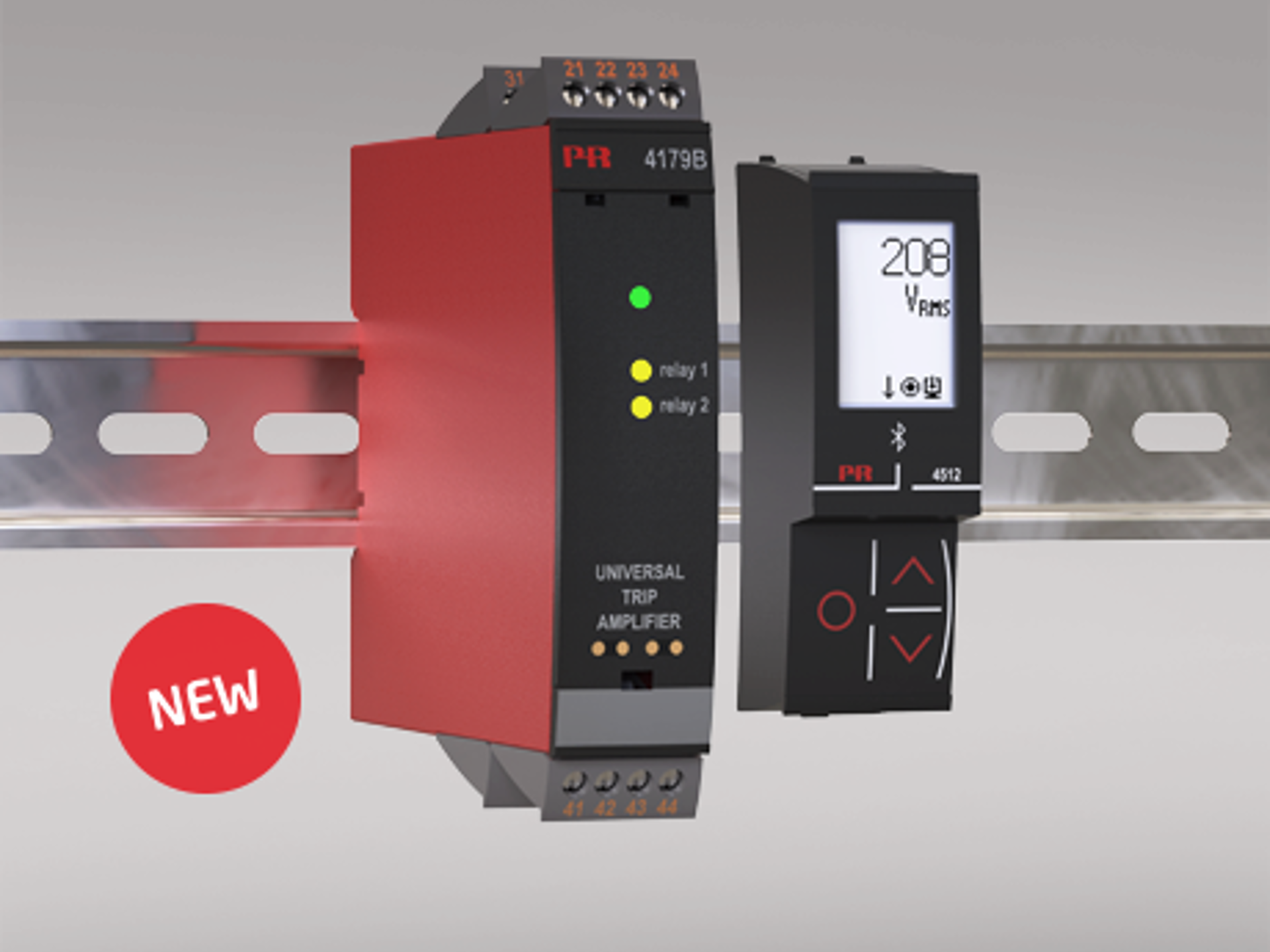
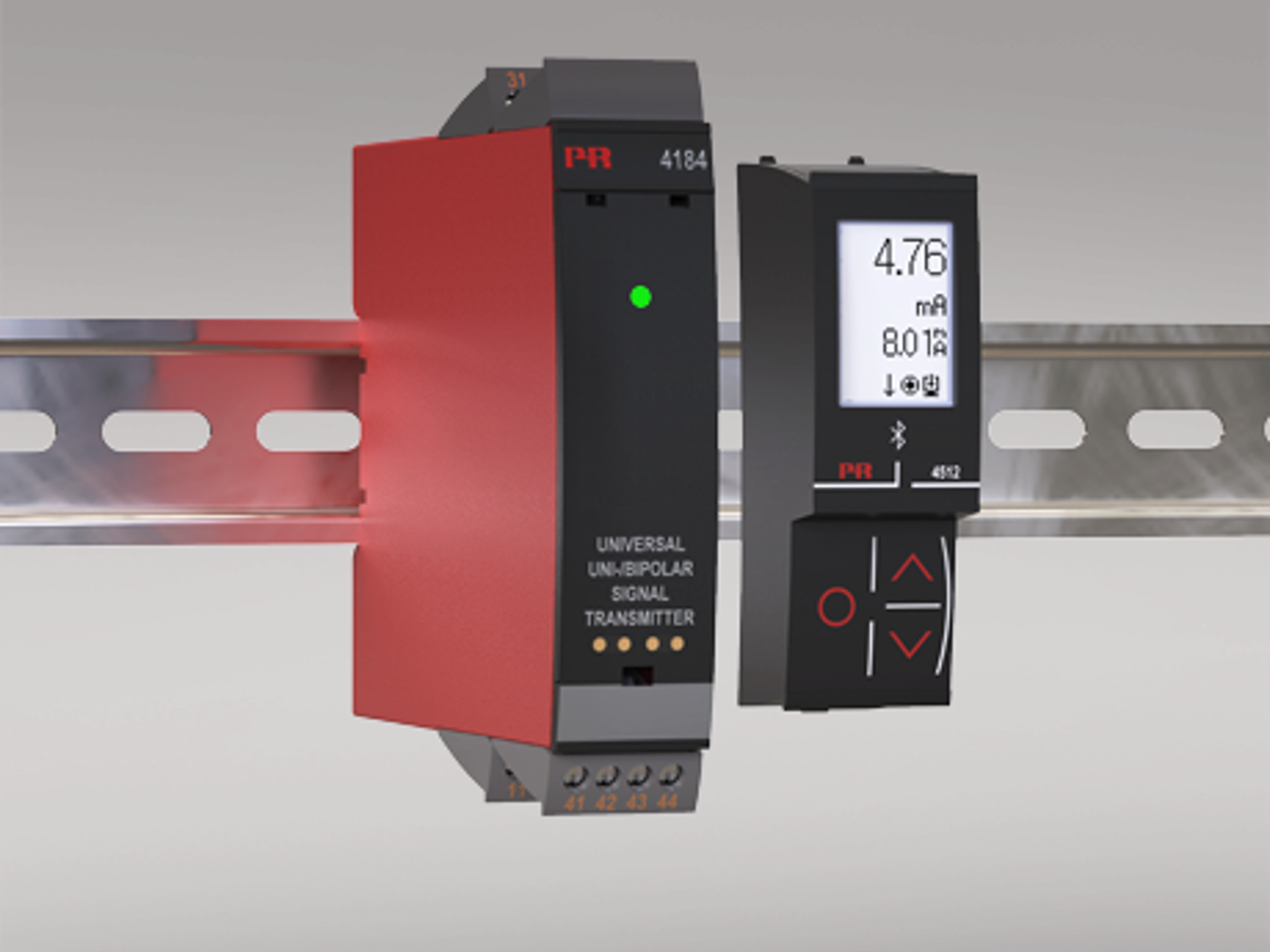
Built on years of hands-on application experience, PR 4179, PR 4179B, and PR 4184 are designed to solve signal conversion challenges that standard PLC input cards cannot handle on their own.
These universal signal converters combine flexibility, precision, and ease of setup in a compact DIN-rail design. Customer-programmable features are easily accessed using the front-mounted clip-on display, making configuration, scaling, and diagnostics straightforward during commissioning and maintenance.
4179 Universal AC / DC transmitter 4179B Universal trip amplifier | 4184 Universal uni-/bipolar signal transmitter |
|
|
Applications
These devices are well suited for applications where non-standard current or voltage signals must be converted into stable, usable control signals. Common examples include motor load monitoring, battery stack monitoring, and the measurement of low-level or high-potential DC signals.
Motor load monitoring
In applications such as crushers and grinders, motor current can be used as a reliable indicator of load. By measuring one phase through a matching current transformer and connecting it to PR 4179, the signal can be scaled to a 4–20 mA output for a panel meter or control system.
This enables local load indication, supports adjustable trip setpoints, and adds an extra layer of protection against overload and blocked mechanical movement.
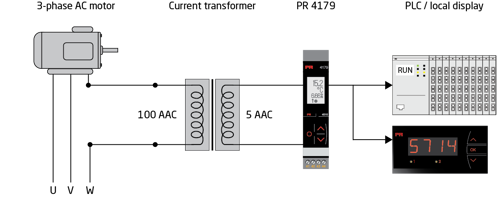
Motor load monitoring
Benefit: The load can now be monitored locally on the panel meter, and a secondary overload protection is introduced for local adjustment and increased safety.
Battery state-of-charge monitoring
In remote telemetry and control installations powered by solar-backed battery systems, continuous visibility into battery module health is essential. PR 4184 can be used to monitor individual battery modules and convert each measured value into a stable signal for the control system.
For example, when monitoring multiple 55 V battery modules in a stack, several PR 4184 units can be installed together with PR 4511 communication interfaces to provide Modbus RTU communication to a PLC-based telemetry solution.
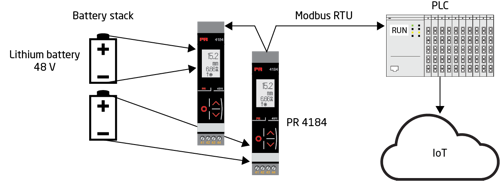
Battery state-of-charge monitoring
Benefit: The result is better visibility into battery condition, less unplanned downtime, and a maintenance approach that shifts from reactive replacement to more proactive service planning.
Why choose PR 4179 and PR 4184?
PR 4179 and PR 4184 give you a practical and reliable way to bring non-standard AC and DC signals into the ranges your PLC, control system, or monitoring equipment can actually use.
Instead of working around the limitations of standard input cards, you gain accurate signal conversion, strong isolation, flexible scaling, and simpler integration across a wide range of industrial applications.
Whether you are monitoring motor load, measuring battery module voltage, or conditioning low-level and high-potential DC signals, these converters help improve measurement confidence, protect valuable control hardware, and reduce time spent on setup and commissioning.
The result is a more robust signal chain, better visibility into process conditions, and a solution that is easier to deploy, maintain, and trust over time.
Let’s talk about your project
Want to discuss whether PR electronics is right for your application?