Vacuum distillation
Valve control
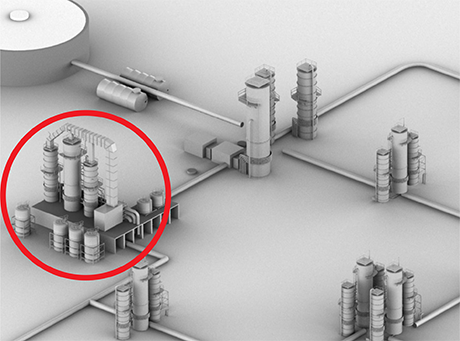
As the name vacuum distillation (also referred to as “low temperature distillation”) implies, the distillation column is under a vacuum, or significantly less than an atmospheric pressure of 760 millimeters of mercury (mmHg). At low pressures, the boiling point of the ADU bottoms is low enough that lighter products can vaporize without cracking, or degrading, the oil. Vacuum distillation produces several types of gas oil. In the next stage of refining, these gas oils are further refined to make products such as light-cycle oil (a type of distillate), gasoline and naphtha.
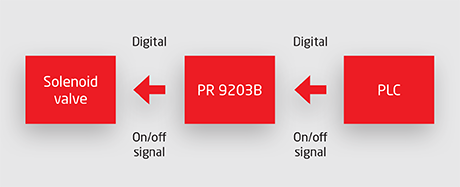
The vacuum column uses a series of pumps around the column to maintain temperature at the correct level at certain points along the tower to achieve the highest yield. The pumps are controlled by solenoid valves to prevent water waste when the pump motor is not working.
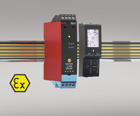
To drive the solenoids, the PR 9203B solenoid / alarm driver is a great choice. The 9203B contains three built-in I.S. barriers, which makes it suitable for use with several coil types. Configuration and monitoring of the 9203 is done via the detachable display front (PR 4510) where it is also possible to select direct or inverted function.
Application:
> Need more information? Please contact us.
What is the relationship between atmospheric and vacuum distillation in a refinery?
Atmospheric distillation is the primary crude oil separation process, operating near ambient pressure to separate lighter fractions (LPG, naphtha, kerosene, diesel). The remaining heavy residue — atmospheric tower bottoms — is then fed to the vacuum distillation unit, which operates under vacuum (typically 25-100 mmHg) to further separate heavy gas oil and lubricating oil base stocks without thermal decomposition. Both units rely heavily on accurate temperature and pressure instrumentation with signal conditioning from devices like the PR 9106B for hazardous area signal isolation.
Why is galvanic isolation essential for valve control loops in vacuum distillation?
Vacuum distillation columns can be 30-50 meters tall with instrumentation distributed across multiple levels, creating significant ground potential differences between field devices and the control room. Without galvanic isolation in the valve control loop, these potential differences introduce current offsets in the 4-20 mA signal, causing valve position errors. PR Electronics isolators provide 2.3-2.6 kVAC isolation, eliminating ground loop currents and ensuring the valve positioner receives exactly the signal the DCS intends to send.