Hydrocracker
Signal repetition / isolation
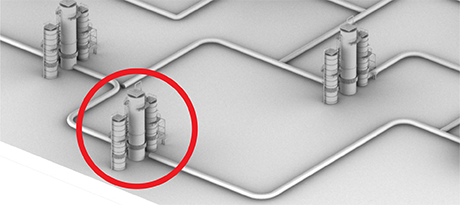
The hydrocracker consist of four giant reactors. Inside the reactors the heavy waxy feed is broken down or cracked to produce petrol, kerosene and diesel components. The hydrocracker uses large quantities of hydrogen from the hydrogen manufacturing unit. The gas is boosted to 150 bar pressure by huge gas compressors.
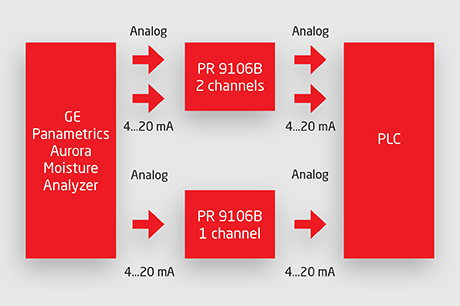
The presence of moisture in gas streams containing trace amounts of hydrogen sulfide produces corrosive byproducts. Such byproducts can destroy expensive process pipes and fittings. Therefore it is very important to measure the exact moisture level to be able to maintain it in the optimum range from 20 to 30 ppmv. That can be done very precisely using a laser-based analyzer like the GE Panametrics Aurora Moisture Analyzer.
3 analog signals monitoring the gas quality from the moisture analyzer need to be connected to the control system in the safe area. To maintain the highest accuracy when repeating the 4...20 mA signal the 9106B HART transparent repeater is a great solution, providing high isolation, robust EMC performance, and process monitoring via the 4510 display/ programming front.
Application:
> Need more information? Please contact us.
What is signal repetition and isolation in a hydrocracker reactor?
A hydrocracker converts heavy gas oils into lighter products using hydrogen at high pressures (1000-2500 psi) and temperatures (600-800 degF). Signal repetition involves passing sensor signals from the high-pressure hazardous area through an I.S. barrier to the safe area control system without degradation. The PR 9106B HART Transparent Repeater performs this function with 1:1 signal accuracy better than 0.1% of span, preserving both the 4-20 mA analog value and the HART digital communication for remote transmitter diagnostics.